Skip to Content

Third-Party Monitoring

MEL-as-a-Service: independent monitoring, evaluation and learning, from the proposal to the final report.

An independent MEL unit, built into your programme

CGS runs the monitoring, evaluation and learning function inside programmes that other organisations deliver: the results framework, the data, the verification and the reporting, handled independently of the partners who implement.

Over the last three years we have been the MEL unit on eight programmes in Egypt, and we run impact monitoring for GIZ across six countries of the Middle East and North Africa: Egypt, Jordan, Lebanon, Morocco, Palestine and Tunisia. The portfolio covers a nationwide grant programme reaching almost 80 NGOs and CSOs, results monitoring across 36 public and private sector partnerships, and two survey rounds of about 600 women and girls each. Fieldwork runs across eight governorates of Egypt with enumerators recruited and trained for each assignment, for GIZ, the Italian Agency for Development Cooperation (AICS) and Endeavor Egypt. We built the M&E system for Endeavor Egypt's XceleRise, and join multi-partner bids as the named MEL partner.

What we take on

  • Theory of change, results framework and indicator definitions for the whole programme
  • MEL plan, data collection tools and a shared reporting template for every partner
  • Baseline, midline and endline studies, with field data collection and verification
  • Quality assurance of partner data before it reaches the donor
  • Learning reviews that feed findings back to programme teams
  • Consolidated progress and results reporting to the donor's format
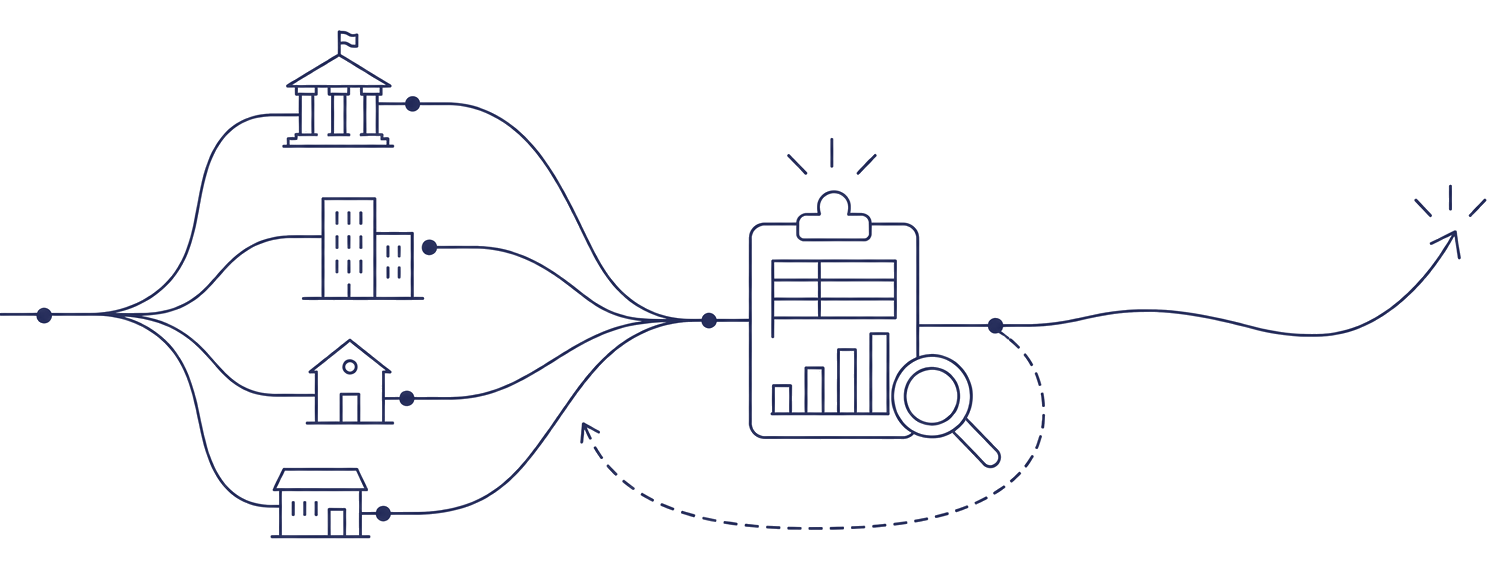
Four organisations feeding one shared results framework, with a learning loop back

Currently the MEL unit on

InnoPA PSI II EOSD JP-SME AIP XceleRise WoMENA II (6 countries)

Shaping a bid? Name CGS as your MEL partner.

Let's partner

Why independent MEL raises the quality of results

01

Independence

The team reporting results is not the team delivering them, so donors can rely on what they read.

02

One standard

One results framework and one level of data quality across every implementing partner.

03

Learning in time

Findings reach programme teams while there is still time to change course.

From proposal to final report

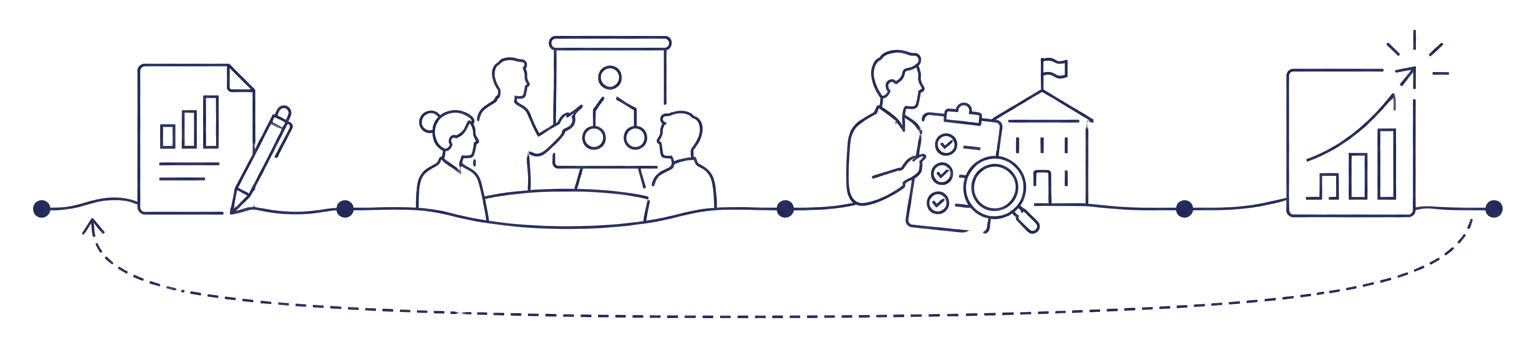
From the bid, through inception and field monitoring, to the final report, with a learning loop back
1

At bid stage

MEL approach, indicators, budget line and team CVs written into the proposal.

2

Inception

Results framework agreed with the donor and partners; baselines set.

3

Delivery

Routine monitoring, verification visits and partner data quality checks.

4

Learning & reporting

Reviews, evaluations and consolidated reports, on the donor's schedule.

Selected assignments

Current

Impact Monitoring and Assessment for WoMENA II, MENA Region

October 2026 - August 2028

The Deutsche Gesellschaft für Internationale Zusammenarbeit (GIZ) commissioned Common Ground Solutions to build and run an impact monitoring and assessment system for WoMENA II, its regional project on women's political and economic participation in the Middle East and North Africa. Across 6 countries, CGS runs 2 survey rounds of about 600 interviews each with women and girls, a census of supported key actors, and at least 20 case studies.

Institutional AssessmentLarge-scale Data Collection Egypt, Jordan, Lebanon, Morocco, Palestine and Tunisia
Current

Monitoring and Evaluation of Decent Employment and Mobility Opportunities for Egyptians (DEMO)

August 2026 - September 2028

CGS provides the monitoring, evaluation, accountability and learning service for DEMO, which works to increase employability and labour mobility for Egyptians in Egypt and Italy through an Italian Egyptian centre for decent employment and mobility. The service covers a MEAL framework built with the PMU and the implementing partners, an open source management information system, partner training and six monthly reporting to September 2028.

Training & Coaching Cairo, Giza, Qalyubia
Current

Smallholder Farmer Monitoring Surveys, Upper Egypt

September 2025 - December 2028

The Deutsche Gesellschaft für Internationale Zusammenarbeit (GIZ) commissioned Common Ground Solutions to run results based monitoring surveys for the Egyptian German Agricultural Innovation Project (AIP) among smallholder farmers in Assiut, Minya and Beni Suef. Across 3 rounds, CGS has interviewed 2,065 beneficiary and control farmers on summer and winter value chains, most recently 804 farmers from 20 villages in winter 2026.

Baseline StudyMapping & LandscapingLarge-scale Data Collection Assiut, Minya, Beni Suef and Sohag
Current

Private Sector Innovation Programme (PSI II)

November 2024 - October 2027

Designing mixed-method data collection tools and delivering baseline, end-line and periodic surveys for PSI II's results-based monitoring framework, under EU and Egyptian data protection compliance.

Large-scale Data Collection Egypt
Current

Partnerships and Small and Medium Enterprise Promotion (JP-SME)

October 2024 - February 2027

GIZ commissioned CGS to monitor and measure results for 36 public and private sector partnerships under the JP SME project. CGS conducts tracer surveys with trained workers and enterprise surveys across the 36 partnerships, tracking Industry 4.0 skills, organizational competencies, HR systems and gender diversity.

Tracer StudyLarge-scale Data Collection Egypt
Current

Equal Opportunities for Social Development Project (EOSD)

May 2024 - April 2026

Steering the entire monitoring and evaluation portfolio for a nationwide programme channelling grants to almost 80 NGOs and CSOs, and advising the Civil Society Support Fund on its strategy and M&E system.

Training & Coaching Nationwide, Egypt

M&E Support for XceleRise

Phase I: October 2024 - November 2025 | Phase II: November 2025 - July 2026

Co-developing a theory of change and results framework for the XceleRise Program, building an actionable M&E plan and training staff to run it.

Baseline StudyEndline Evaluation Egypt

Questions we are asked

An arrangement in which the monitoring, evaluation and learning function sits with an organisation other than the one delivering the programme. CGS builds and runs the results framework, collects and verifies the data, and reports, independently of the partners who implement.

Monitoring runs continuously alongside implementation and reports against the programme’s own indicators. An evaluation is periodic and judges the programme against criteria such as the OECD/DAC set. CGS provides both, and the monitoring data is what an evaluation later draws on.

At proposal stage. A results framework designed to the donor’s standard from inception avoids the retrofitting that follows when indicators, baselines and data flows are agreed after activities have started.

Yes. CGS is named in multi-partner bids as the MEL partner, contributing the MEL design, the staffing and the reporting plan to the proposal.

Both, deliberately. CGS runs its own fieldwork with enumerators recruited and trained for the assignment, and separately verifies data reported by implementing partners through data quality assurance checks against source records.

Donor compliance and audit requirements, with OECD/DAC criteria applied where the commissioner requires them. Fieldwork follows informed consent, safeguarding and data protection protocols.

Shaping your next proposal? Leave a seat for MEL.

Let's partner